























The Rebuilt Sky
The Ten Days — Story Three
The World After the Silence
Five years after the solar event, a child in a coastal town watched a weather forecast on a screen and asked why the presenter mentioned satellites.
Her teacher explained that satellites observed the atmosphere, helped track storms, supported navigation, carried communications, and performed many other tasks. The child looked puzzled.
“Don’t they always do that?”
The teacher paused.
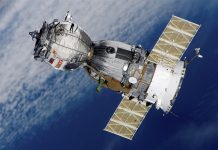
For the child’s generation, the answer was almost yes. The sky was crowded again. Weather maps showed broad patterns across oceans. Ships reported their positions through satellite services. Aircraft used modern navigation systems. Remote communities had communications options that had not existed during the worst months of the crisis.
The world had recovered much of what it had lost.
But the recovery had not restored the world that existed before.
The first years had exposed the difference between possessing technology and depending on a system. A satellite could be replaced. A constellation required many satellites. A functioning constellation depended on launch vehicles, factories, ground stations, trained operators, software, electricity, communications networks, financing, and political agreements.
The loss had reached far beyond the spacecraft themselves. It had revealed how many services depended on a chain of systems that most people never saw.
Some governments responded by rebuilding as quickly as possible. Others used the crisis to redesign their infrastructure. A few attempted to recreate their old capabilities almost exactly, only to discover that the industrial and political circumstances that had supported them had changed.
The recovery was measured in launches, restored services, and investment.
Its deeper consequences were harder to measure.
Some nations had become more influential because they controlled launch capacity or essential technology. Others had gained security by investing in systems that could operate without satellite assistance. Still others had become dependent on partnerships that offered valuable services but left them with little control over the infrastructure supplying them.
The catastrophe had ended in ten days.
The transformation that followed took years.
The New Architecture
The first major lesson was that resilience required more than putting satellites back into orbit.
Before the event, many organizations had treated satellite services as dependable utilities. They purchased access, built procedures around it, and assumed that the underlying infrastructure would continue to operate.
Afterward, the assumption became difficult to defend.
Governments commissioned studies of critical dependencies. Telecommunications companies reviewed their timing systems. Transport operators examined navigation backups. Emergency agencies reconsidered how they would communicate with remote locations. Weather services invested in additional observations from the ground, air, and sea.
Not every recommendation was adopted. Some were too expensive. Others competed with urgent needs in housing, energy, healthcare, and industrial recovery. A backup system that existed only on paper was cheaper than one that had to be built, maintained, and tested.
But the principle had changed.
Critical services would no longer be judged only by how efficiently they worked under ordinary conditions. They would also be judged by what happened when a component failed.
The satellite industry changed accordingly.
New constellations spread certain functions across larger numbers of spacecraft. Some satellites were designed for faster production and replacement. Manufacturers reduced dependence on a handful of specialized components where practical. Governments supported domestic suppliers for technologies considered essential, even when those suppliers could not match the prices offered by the largest international manufacturers.
These measures did not make satellite systems invulnerable. A constellation could still be disrupted by launch failures, cyberattacks, hostile action, component shortages, or a widespread event that affected many spacecraft at once. More satellites could provide redundancy, but only if the network, ground equipment, and operating arrangements were also resilient.
The new systems were not all alike.
Some countries favored large, sophisticated spacecraft with extensive capabilities. Others invested in smaller, less expensive satellites that could be replaced more frequently. Commercial operators built networks intended to sell services across national borders. Military organizations developed systems with restricted access and specialized protection.
The resulting sky was more diverse than the one that had existed before the catastrophe.
It was also more complicated.
A service that appeared seamless to a user might depend on satellites owned by one company, ground stations operated by another, launch services supplied by a third country, and regulatory permission granted by several governments. A network could be international in its operations but concentrated in its ownership.
The physical sky had become crowded again.
The question of who controlled it had become more urgent.
The Ground Beneath the Sky
Not every important change took place in orbit.
During the first year of recovery, several governments had funded terrestrial alternatives to services previously supplied by satellites. At first, these projects were described as temporary measures. Some were abandoned when budgets tightened. Others proved useful enough to become permanent.
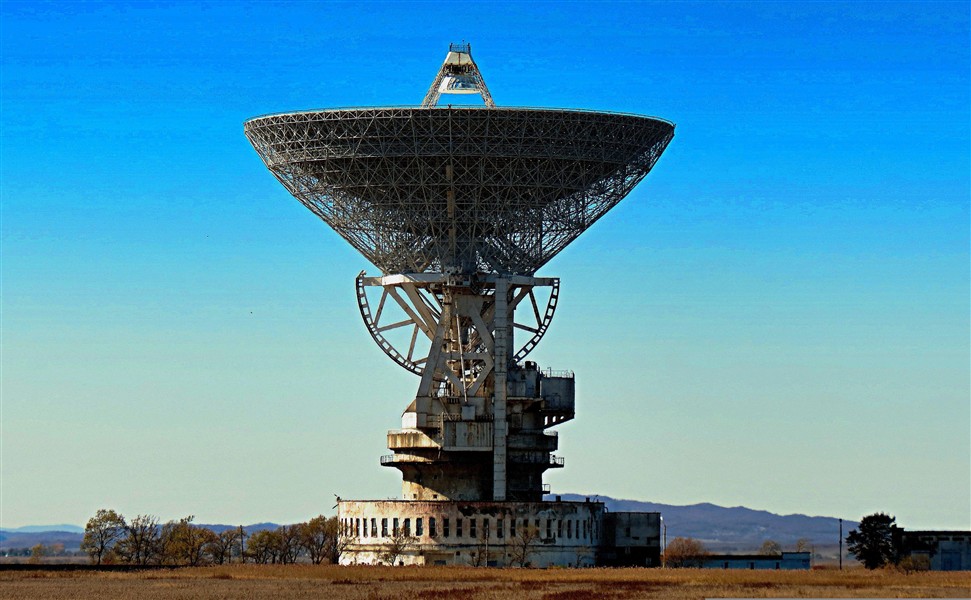
Communications companies expanded fiber connections where construction was practical. Additional microwave links connected communities and facilities that needed reliable regional communications. Emergency agencies invested in independent radio systems. Some remote areas received new ground infrastructure, while others continued to depend on satellite services because the cost of building terrestrial networks across difficult terrain remained prohibitive.
The changes were uneven.
A city with established fiber networks could often restore data services without needing satellites to carry the traffic. A remote settlement separated by mountains or hundreds of miles of sparsely populated land faced a different calculation. Satellite links remained economically attractive because laying and maintaining terrestrial infrastructure could cost far more.
The catastrophe did not prove that satellites were unnecessary.
It proved that no single method should be mistaken for a universal solution.
Navigation systems received similar attention. Satellite navigation remained essential for many applications, but some critical operations adopted additional methods. Inertial navigation, terrestrial positioning where available, improved timing references, and better operational procedures reduced reliance on a single source. Some systems used several independent signals or methods to detect when information could not be trusted.
These safeguards were not free. Equipment had to be installed, maintained, and tested. Personnel needed training. Systems that had been designed around satellite timing sometimes required expensive modifications. Smaller organizations struggled to pay for upgrades that larger institutions could absorb.
The same problem appeared throughout the economy. Resilience was valuable, but its benefits were often invisible until a failure occurred. During a crisis, everyone wanted redundancy. During ordinary years, finance departments asked why it was necessary.
The memory of the ten days helped keep the question alive.
It did not settle every budget dispute.
By the fifth year, the world had not replaced every satellite service with a terrestrial alternative, nor had it eliminated the risks associated with space infrastructure. Instead, it had begun building a more layered system: satellites where they offered clear advantages, terrestrial networks where those were practical, and backup methods for services whose failure would carry serious consequences.
The result was less elegant than the old system’s promise of seamless connectivity.
It was potentially more resilient.
The Countries That Rose
The catastrophe had not affected every nation in the same way, and recovery had not followed a common schedule.
Countries with established space industries had possessed a major advantage. They had launch facilities, engineering teams, testing equipment, and suppliers that could be redirected toward replacement programs. Even they faced shortages and difficult choices, but they had a foundation on which to build.
Countries without those capabilities had to decide how to participate in the new system.
Some joined regional partnerships. They contributed money, research, ground stations, or specialized manufacturing in exchange for access to satellite services. Others signed long-term commercial contracts. A few invested heavily in national programs, hoping to reduce their dependence on foreign providers.
The most successful partnerships were not necessarily those with the largest budgets. They were the ones that established clear responsibilities, stable funding, shared technical standards, and procedures for resolving disputes. Their members knew what they were contributing and what they could reasonably expect in return.
Other agreements were less successful. Some had promised more capacity than the participants could deliver. Others left critical decisions to committees that could not act quickly during an emergency. In several cases, political disagreements prevented technical arrangements from reaching their full potential.
A new hierarchy emerged.
Countries that could launch satellites, manufacture key components, and operate sophisticated networks gained leverage. They could offer services to others, negotiate favorable terms, and shape the technical standards that determined how systems worked together.
Some smaller countries responded intelligently. Rather than attempting to reproduce an entire space industry, they specialized. One developed instruments and components. Another invested in data processing and scientific analysis. A third provided ground infrastructure and regional monitoring.
These countries gained influence by becoming valuable partners.
Others found themselves purchasing access on terms set elsewhere.
The distinction was not simply between rich and poor nations. Political stability, technical education, industrial capacity, geography, and the quality of institutions all influenced the outcome. Some wealthy countries discovered that money alone could not rapidly produce expertise or reliable industrial supply chains. Some smaller countries gained importance because they possessed a useful capability that larger partners needed.
The new balance of power was not fixed.
But it was no longer the same balance that had existed before the ten days.
The Dependency Debate
The first serious dispute of the fifth year concerned a satellite network operated by an international consortium.
The network provided communications and data services to several countries. Its members had invested in the system after the catastrophe, and it had become an important part of regional infrastructure. Hospitals, shipping companies, emergency agencies, and businesses relied on its services.
The arrangement had worked well until one member entered a political confrontation with another.
The government operating the consortium’s principal control facilities argued that certain services should be restricted because of a security concern. The affected country insisted that the network’s charter guaranteed continued access to civilian services.
Both governments claimed to be defending the agreement.
The consortium’s administrators requested legal guidance. Technical staff prepared alternatives. Commercial customers asked whether their contracts remained valid. Other member states worried that a dispute between two governments could interrupt services for everyone.
The network continued operating while the arguments unfolded. There was no immediate shutdown and no dramatic collapse. Instead, uncertainty spread through contracts, planning, and investment.
A shipping company postponed an expansion. A communications provider sought a second supplier. Government agencies reviewed their contingency plans. Businesses began asking whether they could afford to depend on infrastructure whose operation might become a bargaining tool.
The dispute was resolved through a negotiated compromise. Civilian services continued under additional safeguards, while the parties agreed to a formal process for handling future restrictions.
The network survived.
The episode nevertheless changed the way its members thought about dependency.
Before the catastrophe, access to a service had often been treated as a commercial question. Afterward, access was increasingly recognized as a strategic one. A country could possess modern equipment and still lack control over the systems that made it useful.
The answer was not necessarily to build everything at home. Complete independence was beyond the means of many countries and inefficient for many others. International cooperation could provide better services at lower cost, pool expertise, and distribute risk.
But cooperation required trust, enforceable commitments, and credible alternatives when commitments failed.
The lesson was uncomfortable: the more essential a shared system became, the greater the temptation for its owners to use access as leverage.
The world had rebuilt the satellites.
It was still learning how to govern the relationships built around them.
The Commercial Sky
Commercial companies had become more important during reconstruction.
Before the catastrophe, private operators had already supplied communications, navigation-related services, Earth observation, and other capabilities. Afterward, governments depended on commercial firms to manufacture spacecraft, provide launch services, operate networks, and deliver data.
Public money supported much of the early recovery. Governments signed contracts that gave companies enough certainty to expand production. In return, private firms promised faster delivery, lower costs, and services that could be shared across multiple customers.
The arrangement accelerated reconstruction.
It also concentrated influence.
A small number of companies possessed the launch capacity, manufacturing expertise, or network coverage needed to meet urgent demand. Their decisions affected governments that had little practical alternative. Some firms grew into essential infrastructure providers. Others failed when their promises exceeded their resources or their business models depended on demand that never materialized.
Regulators faced a difficult balance.
If they imposed too many restrictions, they risked slowing investment and discouraging the companies needed to rebuild. If they imposed too few, essential services could become dependent on private decisions that governments struggled to influence.
The debate extended beyond price.
Who would receive priority during a major emergency? Could a company suspend service to a government that violated its terms? How would customer data be protected? Would one provider be allowed to control a network on which several countries depended? Who would be responsible for maintaining services if a company went bankrupt?
No single law answered every question. Different countries adopted different rules, and international agreements developed slowly.
Some governments required backup arrangements for critical contracts. Others supported competing providers to reduce concentration. A few created public infrastructure intended to ensure that at least a minimum level of essential service would remain available if commercial arrangements failed.
The commercial sector did not become the enemy of public recovery. Nor did private investment automatically solve every problem.
It became another part of the system that governments had to manage.
The catastrophe had revealed the danger of dependence on a fragile technological chain. Reconstruction created a new danger: dependence on a small number of institutions capable of controlling that chain.
The Security Question
Military planners had drawn their own conclusions from the loss.
Before the catastrophe, satellites had supported communications, navigation, surveillance, early warning, and many other defense functions. The event had shown how much modern military operations relied on infrastructure that could be disrupted without a conventional attack.
The response was not to abandon space. Military organizations continued to invest in satellites because the capabilities they provided remained valuable.
Instead, they sought alternatives and redundancy.
Some systems were designed to operate with reduced satellite support. Communications plans included additional terrestrial and radio options. Navigation procedures were revised. Exercises tested how units would function when space-based services were unavailable or unreliable.
These preparations improved resilience, but they also introduced new complications.
A military network with several backup methods could be more expensive and harder to operate. Different systems might not provide identical information or performance. Personnel had to know when to switch methods and how to interpret conflicting data. Backup capabilities that had never been tested under realistic conditions could fail at the moment they were needed.
The political implications were equally important.
Governments that feared dependence on foreign networks invested in national systems. Some described these programs as defensive necessities. Neighboring countries saw the same investments as evidence that the balance of power was shifting.
A government that built a new surveillance capability might claim it was protecting itself. Another government might respond by expanding its own system. Each step could be presented as reasonable in isolation, while the combined result increased suspicion.
The catastrophe had created an opportunity for cooperation in space security. Several nations proposed common procedures for sharing information about dangerous debris, coordinating certain operations, and reducing the risk of misunderstandings.
Progress was made, but it was limited. Governments were willing to cooperate where their interests aligned. They were reluctant to accept arrangements that might restrict military freedom of action or reveal sensitive capabilities.
The new sky was safer in some ways and more contested in others.
The loss of satellites had demonstrated that modern security depended on space. It had not persuaded nations to stop competing over it.
The Unfinished Map
By the fifth year, weather forecasting had improved substantially. Navigation services were widely available again. Communications networks had expanded, and many critical organizations possessed better backup arrangements than they had before the catastrophe.
Yet the recovery remained uneven.
Some regions had modern satellite services and strong terrestrial alternatives. Others depended on international providers or continued to face gaps in coverage. Wealthier countries could afford redundant systems. Poorer countries often had to choose between resilience and other urgent investments.
The difference was not always visible on a map of satellite coverage. A signal might reach a country without being affordable to its residents. A government might have access to data without enough trained personnel to use it effectively. A hospital might possess communications equipment but lack reliable power. A farmer might benefit from better observations only if the information arrived in a useful form and at a price the farm could support.
Technology alone did not guarantee recovery.
Institutions, training, electricity, communications, financing, and public access mattered just as much.
International development organizations began to argue that essential space-based services should be treated as part of broader infrastructure planning. Their proposals included shared data programs, technical training, support for regional ground systems, and agreements that would protect access to selected civilian services during emergencies.
The proposals were welcomed in principle.
Funding was more difficult.
Governments that had spent heavily on their own recovery were reluctant to commit large sums abroad. Some argued that assistance would strengthen regional stability and reduce the risk of future crises. Others said that national resources should be directed toward domestic needs.
The same argument appeared in almost every major international program: shared resilience benefited everyone, but the costs were immediate and often concentrated on those who paid first.
The world had learned that a disruption could spread through interconnected systems. It had not fully learned how to distribute the cost of protecting those systems.
The Second Sky
The fifth anniversary of the catastrophe brought a series of international meetings and public ceremonies.
There were speeches about human ingenuity, scientific progress, and the determination to recover. Engineers received awards. Governments displayed photographs of replacement satellites. Commercial companies announced new investments. Students visited laboratories and launch facilities.
The achievements were real. Thousands of people had helped rebuild capabilities that once seemed beyond repair. New spacecraft were operating, manufacturing had expanded, and several countries had established partnerships that would have been politically difficult before the event.
The ceremonies also concealed an unresolved question.
Had the world become more resilient, or had it merely rebuilt the systems it knew how to build?
The answer varied.
In some sectors, the changes were substantial. Critical organizations had tested backup procedures and invested in alternatives. Satellite operators had diversified certain supply chains. Governments had developed better coordination plans. Some international agreements had become more practical because the participants understood the cost of failure.
Elsewhere, the old habits had returned. Agencies postponed maintenance. Businesses selected the cheapest provider without considering what would happen if that provider failed. Governments announced ambitious plans without securing the long-term funding needed to complete them.
The memory of the ten days had faded unevenly.
For those who had lived through the immediate crisis, the absence of satellites had been frightening because it exposed an unfamiliar dependency. For the next generation, satellites were ordinary infrastructure again. Their reliability was taken for granted, as it had been before.
That was understandable. A society could not remain permanently in emergency mode.
But resilience depended on remembering what ordinary conditions concealed.
At the anniversary meeting, a representative from a small country that had joined a regional satellite partnership addressed the delegates. Her country had not built its own launch vehicle or a complete satellite industry. Instead, it had invested in ground infrastructure, technical training, and a shared data network with neighboring states.
The arrangement had cost less than a national program, though it required continued cooperation and left the country dependent on the partnership’s stability.
She described the choice as a practical one.
Her country could not afford to control every part of the system. It could work to ensure that no single failure would leave it without options, and that its partners had reasons to keep the system working.
It was not independence.
It was a form of security built through relationships.
Several delegates applauded. Others listened without changing their positions.
The speech did not settle the debate. It expressed the problem more clearly than many of the technical reports had done.
No country could guarantee its future by assuming that every essential capability could be owned and controlled within its borders. No country could guarantee it by assuming that international cooperation would always survive a political crisis.
The challenge was to build systems that remained useful when relationships were strained, and relationships that remained valuable when cooperation became inconvenient.
The sky above the conference hall was full of satellites again.
The political world beneath it remained divided.
What the Ten Days Changed
Five years after the event, no serious government expected a single satellite launch to restore the world to its former condition. The early scramble had given way to a more deliberate effort to build networks, replace aging equipment, train personnel, and establish reliable arrangements for sharing services.
The recovery had also changed the meaning of technological strength.
It was no longer enough to ask how many satellites a nation owned or how quickly it could launch a replacement. Governments increasingly considered whether they could manufacture critical components, maintain ground systems, operate without certain services, and obtain help when domestic capabilities failed.
Some nations had gained influence. Others had become more dependent on partnerships or commercial providers. A few had discovered that cooperation could provide capabilities they could never have built alone. The strongest systems often combined national investment with shared infrastructure and multiple ways to perform essential tasks.
No universal model had emerged.
The world remained a place of competing interests. Governments still guarded military secrets, companies still sought profits, and international agreements still struggled when national priorities collided. The catastrophe had not removed those forces. It had made their consequences more visible.
The satellites had returned, but the old assumptions had not survived intact.
A modern society could withstand the loss of a technology if it retained enough knowledge, infrastructure, institutions, and time to rebuild. Yet the ability to recover did not mean the recovery would be fast, fair, or politically simple.
The decisive questions were not only technical.
Who would pay for redundancy? Who would control essential services? Which dependencies were acceptable? What should be shared, and what would governments insist on controlling themselves? How much should a country spend preparing for a disruption that might never happen again?
Those questions could not be answered by engineers alone.
They belonged to elected governments, public institutions, businesses, and the societies that depended on them.
The first story had ended when the Sun fell quiet and the satellites remained gone. The second had followed the first launches and the struggle to decide what would return. This final story had reached a world where much of the sky had been rebuilt, but the arrangements beneath it had changed.
The ten days had not ended civilization.
They had exposed the conditions on which civilization depended.
Five years later, the world was more connected again, but it understood that connection differently. Satellites remained indispensable. Terrestrial networks remained essential. International partnerships offered advantages that no nation could easily reproduce alone. And every one of those strengths carried a question about what might happen if the system failed.
The rebuilt sky was not a return to the past.
It was a choice about the future.
Whether the nations beneath it would use what they had learned to cooperate—or allow old rivalries to turn shared vulnerabilities into new instruments of power—remained unresolved.
The satellites were back.
The work of learning how to live with them had only begun.
Author’s Note
The Rebuilt Sky is the third and final story in The Ten Days, a speculative-fiction series about a catastrophic solar event that destroys the world’s satellite capabilities. Years after the event, the story examines technological reconstruction, terrestrial alternatives, international partnerships, commercial influence, national security, and the changing balance of power.
The series is based on a central premise: the loss of satellites does not automatically destroy civilization. Modern societies retain knowledge, people, industrial capacity, and infrastructure that can support recovery. But rebuilding is neither immediate nor equal, and technological interdependence becomes more difficult when nations must cooperate while competing for security and influence.
Copyright Notice
This story is a work of speculative fiction. The characters, events, organizations, and situations portrayed are fictional or imagined for the purposes of this story. Any resemblance to actual persons, events, or organizations is coincidental.
No part of this publication may be reproduced, distributed, or transmitted in any form or by any means without prior written permission from the copyright holder, except for brief quotations used in reviews or other uses permitted by copyright law.