





















The Figure on the Threshold
An account of three unexplained encounters
There are experiences in life that remain unexplained, sometimes for years. We may put them aside and continue with our lives, only to find ourselves thinking about them again when circumstances change. Whether these experiences have a meaning beyond what we understand is a question that does not always have an answer.
This is the account of a man who experienced something unusual on three separate occasions. The encounters were separated by years and occurred in two different houses. Each time, the experience was the same.
The First Two Encounters
The man had already experienced profound loss in his life. His first child died a few months after birth. He grieved, but as time passed, the intensity of his grief diminished and life continued. A few years later, his son died. Again, he grieved, although the period of intense grief was shorter.
Eventually, his marriage ended, and he found himself living alone.
It was during this period that he experienced something he could not explain.
On two separate occasions, he awoke in the middle of the night with the distinct sense that someone was in his bedroom. He sat up and looked toward the doorway.
A figure stood on the threshold.
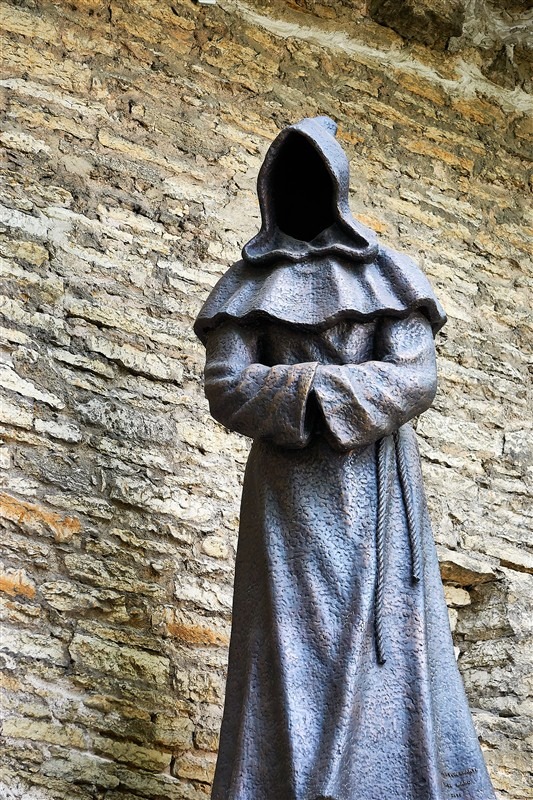
It appeared to be a person wearing a cape and a hood. The hood concealed the face completely. He could not see the figure’s eyes.
The figure did not move. It made no sound. It simply stood in the doorway.
The man was not frightened. Despite the unusual appearance of the figure, he felt calm. He had the impression that the figure was aware of him and deliberately watching him. He tried to maintain eye contact, although there were no visible eyes with which to make contact.
The figure remained there for what seemed to be several minutes.
Eventually, the man glanced away. When he looked back, the figure was gone.
He had not seen it walk away. It had simply disappeared from the doorway.
The same experience occurred a second time, again in the house where he was living alone.
After that, the figure did not appear again for several years.
The man did not associate the encounters with any particular event in his life. He did not believe the figure had come to deliver a message, nor did he draw any conclusions about what it might be. The experiences were unusual, but he continued with his life.
A New Life
Several years later, the man married again and moved to another house in a different town.
His new wife and he developed a deep connection. Their relationship became an important part of his life, and the happiness they shared was unlike anything he had known in quite the same way before.
Nevertheless, he carried an underlying fear that he would somehow lose her. He did not specifically imagine her dying. It was simply a persistent uneasiness about losing someone who had become so important to him.
His wife noticed it, too. On several occasions over the last few years of their life together, she commented that he often looked at her with sad eyes, as though he expected to lose her.
She reassured him that she was not going anywhere.
Four years into their marriage, while his wife was away from home, the figure appeared again.
He awoke in the middle of the night.
There it was, standing on the threshold of the bedroom doorway.
The cape. The hood. The concealed face.
It stood motionless, just as it had before. It made no sound. The man again felt calm, and again he had the sense that the figure was watching him.
He tried to maintain eye contact, though he could not see its eyes.
After several minutes, he glanced away. When he looked back, the figure was gone.
The experience was identical to the two earlier encounters. The only differences were the house, the town, and the years that had passed.
There was no fourth encounter.
The man told his second wife about these experiences. He told no one else.
The Loss That Changed His Life
Several years later, his wife died.
The grief that followed was unlike his earlier experiences of loss. When his children had died, he had grieved deeply, but eventually he had been able to move forward. His wife’s death affected him in a much more fundamental way.
He had lost not only someone he loved, but the person with whom he had built his daily life. Their connection had become part of the structure of his existence. Her absence changed his life in ways that went far beyond missing her companionship.
For months, he lived with the consequences of that loss.
Then, several months after her death, he began thinking about the three encounters again.
He was an overanalyser by nature. He tended to revisit experiences, turn them over in his mind, and consider possibilities he might not have thought about at the time.
When the figure had appeared, he had not connected it with any event. He had not thought it was a warning. He had not imagined that it had anything to do with his wife.
Only later did he begin reconsidering what had happened.
Why had the figure appeared three times? Why had it looked the same on each occasion? Why had it stood on the threshold, never moving? Why had it disappeared whenever he looked away? And why had the experiences been separated by years, including a move to another house in another town?
He had no answers.
Nor did he know whether the encounters had any relationship to the losses he had experienced or to the life he had built with his wife. He could not establish a connection between the figure and her death.
But the experiences remained with him, and after her death he found himself thinking about them in a way he had not before.
What Was the Figure?
There are several ways to approach an account such as this.
Human perception can produce vivid experiences, including experiences associated with waking from sleep. That possibility deserves consideration. Yet the details available here are insufficient to establish that this was the explanation.
Others might interpret the figure through a spiritual or supernatural framework. The account, however, does not establish that interpretation either.
What can be said is that the man experienced three encounters that he remembered as identical. He described a hooded figure standing motionless on the threshold of his bedroom doorway. He felt no fear, believed the figure was watching him, and found it gone whenever he looked back after glancing away.
He did not initially assign any special meaning to these experiences. It was only after his wife’s death, and the profound grief that followed, that he began to reconsider them.
Perhaps the encounters had an explanation that he never discovered. Perhaps the significance they acquired later arose from the circumstances of his life and the questions that grief brought to the surface.
We cannot know from this account alone.
The figure appeared three times. Each time, it stood silently on the threshold. And each time, it was gone when he looked back.
The man was left with the memory of those encounters, the loss of the woman he loved, and questions that had no clear answers.
Sometimes the most honest account of an unexplained experience is not a declaration of what happened, but a faithful record of what a person experienced—and an acknowledgment of what remains unknown.