



















The following morning, Bissula began the journey that would determine the fate of the seven villages.
She did not travel alone. Twenty warriors from Eichenwald rode behind her, carrying the oak-leaf banner of their village. At the front rode Bissula, her auburn hair tied back against the wind, her sword at her side and her father’s old shield across her back.
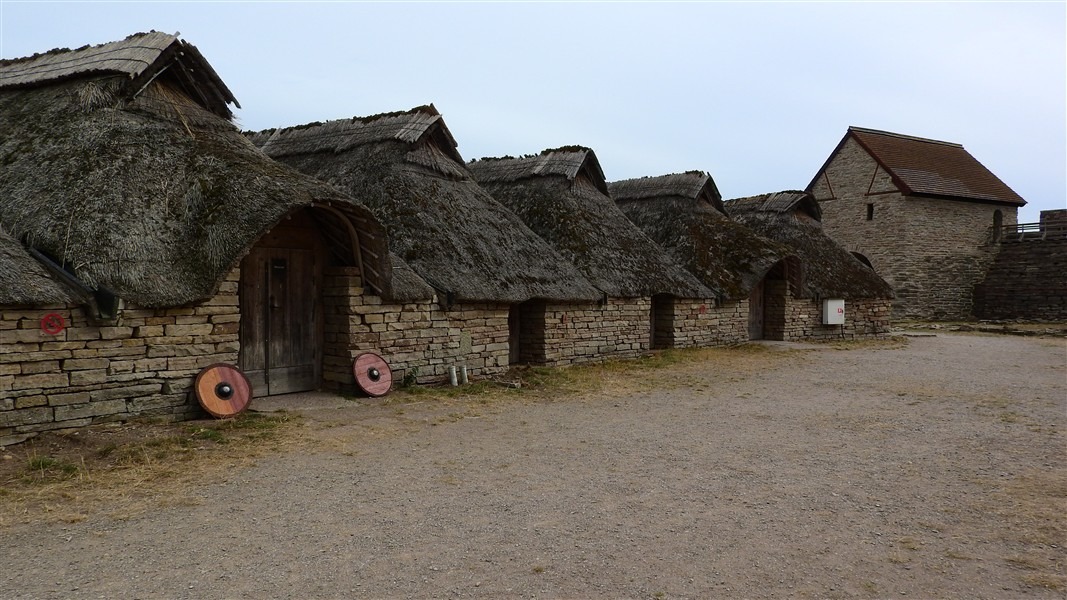
Their destination was Falkenruh, the village on the high ridge. It was the safest place for the chiefs to meet. From its rocky heights, watchmen could see for miles across the surrounding valleys. If Grimhild’s warriors approached, there would be plenty of warning.
But Bissula knew that bringing the seven chiefs together would be harder than fighting an army. Each chief had his own pride. Each believed his village could survive.
And none wanted another chief telling him what to do.
When Bissula arrived at Falkenruh, the other chiefs had already begun to gather. There was Hakon of Waldheim, a broad-shouldered farmer who believed his grain stores made his village indispensable.
There was Rurik of Steinwald, a stern warrior who trusted weapons more than diplomacy.
The chief of Flussheim, Gerda, was a sharp-minded woman who controlled much of the river trade.
Eberdorf’s chief, Konrad, was famous for his horses and stubborn temper.
Ravensmark was represented by Erik, a quiet hunter who trusted few people.
And Astrid, the elderly chief of Falkenruh, sat at the head of the council.
Alaric, Bissula’s father, represented Eichenwald.
The seven chiefs gathered around a great wooden table. Bissula stood behind her father.
Astrid raised her hand. “We are here because Grimhild is moving against us.”
Konrad snorted.“Against some of us.”
Gerda looked at him. “He has already attacked three villages.”
“He has attacked the northern villages,” Konrad replied. “Eberdorf has not been touched.” Bissula stepped forward. “That is because he has not reached you yet.”
Konrad glared at her. “You are young to speak to chiefs in that manner.”
Bissula did not move. “I am young enough to have seen what your pride may cost you.” The room became silent. Alaric looked at his daughter but said nothing.
Rurik leaned forward. “What do you propose?”
“Unity.”
He laughed. “Against Grimhild?”
“Yes.”
“We already have warriors.”
“Separate warriors,” Bissula replied. “That is different.” She walked to the table and placed a small wooden carving of seven oak leaves upon it. “The villages are seven,” she said. “But our enemy sees only one thing—a divided people.”
She pointed to each leaf. “If he attacks Ravensmark, Eberdorf waits. If he attacks Eberdorf, Waldheim waits. If he attacks Waldheim, Steinwald waits.”
She looked around the table. “He does not have to defeat seven villages. He only has to defeat them one at a time.”
Astrid nodded slowly. “That is the truth.”
But Rurik was unconvinced. “How do you propose we fight?”
“Together.”
“How?”
Bissula pointed toward the map spread across the table. “We establish watch posts on the northern ridges. Falkenruh will provide archers. Ravensmark will provide scouts. Eberdorf will provide horses. Flussheim will control the river crossings. Waldheim will provide grain. Steinwald will forge weapons. Eichenwald will coordinate the warriors.”
Konrad frowned. “You have assigned every village a duty.”
“Because every village has something the others need.” For the first time, no one interrupted her.
Then a horn sounded outside. Every warrior in the longhouse turned toward the door. A rider entered.
“Grimhild’s scouts have been seen.”
The council erupted. “How many?”
“Unknown.”
“Where?”
“North of Ravensmark.”
Rurik immediately stood. “Then we should attack them before they attack us.”
“No,” Bissula said.
He turned toward her. “Why not?”
“Because that is what Grimhild expects.” Bissula moved toward the doorway. “His army is larger. If we meet him in open ground, he wins.”
“Then what do you suggest?”
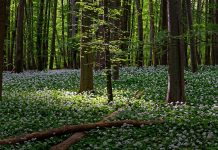
“The forest.”
Rurik stared at her.
Bissula smiled faintly. “The forest belongs to us.”
The chiefs began arguing again, but this time the argument was different. They were no longer debating whether Grimhild was a threat. They were debating how to defeat him.
Then something unexpected happened. Gerda of Flussheim rose. “I will provide the boats.”
Hakon followed. “Waldheim will provide grain.”
Konrad hesitated before finally nodding. “Eberdorf will provide horses.”
One by one, the chiefs agreed. Only Erik of Ravensmark remained silent. Bissula approached him. “You have not spoken.”
Erik looked at her. “I have seen Grimhild’s warriors.”
“And?”
“They are not fools.”
Bissula nodded. “I know.”
“They will learn our plans.”
“Then we must give them no plans to learn.”
Erik studied her for several moments. Then he smiled. “I think you may be dangerous, Bissula.”
She smiled back. “I hope so.”
The Council of Seven had finally reached an agreement. For the first time in generations, the seven villages would fight as one. But as the chiefs prepared to leave, Bissula noticed something troubling.
A piece of parchment lay beneath the council table. She picked it up. It contained a rough drawing of the seven villages, their roads, and their defenses.
Someone had been mapping their territory. Someone inside the council had been gathering information. Bissula looked around the room. Seven chiefs. Seven villages. And perhaps one traitor.
She quietly folded the parchment and slipped it beneath her cloak. She told no one. Not even her father.
Because if Grimhild already had someone inside the seven villages, the greatest danger might not be waiting beyond the northern forest. It might already be among them.