






















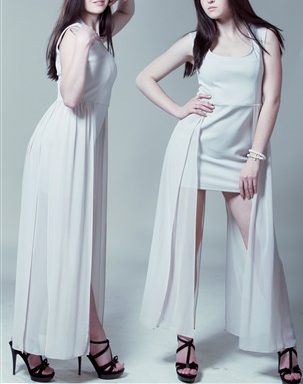
Who Decides How a Woman Should Dress?
Liberal and Conservative Views on Women’s Attire, Freedom, and Social Expectations
A woman’s clothing can seem like a simple matter of personal taste. She chooses a dress, a skirt, a pair of trousers, or something more revealing or more conservative, and goes about her day. Yet throughout history, what women wear has carried meanings far beyond fashion. Clothing has been associated with morality, religion, social status, sexuality, respectability, and the role women are expected to play in society.
Today, disagreements over women’s attire often reflect a broader divide between liberal and conservative values. One side tends to emphasize individual freedom and personal autonomy. The other often places greater importance on tradition, modesty, and established standards of conduct. These descriptions are general tendencies, not absolute rules. People within both political camps hold a wide range of opinions, and many women reach their own conclusions without identifying strongly with either side.
Beneath the disagreement lies a fundamental question: Who has the right to decide how a woman should dress?
The Conservative Perspective: Clothing Communicates Values
Conservative views on women’s attire often begin with the belief that clothing communicates something about the person wearing it. Dress can express respect for oneself and others, reflect religious convictions, and demonstrate an understanding of social expectations. From this perspective, modest clothing is not necessarily a rejection of beauty or fashion. It can be an expression of dignity, self-respect, and personal values.
For some conservatives, traditional standards of dress help preserve distinctions between private and public life. They may believe that certain settings call for a particular level of formality or restraint, and that clothing which emphasizes sexual attractiveness is inappropriate in some circumstances. Religious conservatives may also regard modesty as an expression of faith rather than merely a social convention.
These concerns are not exclusive to women. Men, too, are expected to dress appropriately for workplaces, religious services, ceremonies, and other occasions. Nevertheless, expectations surrounding modesty have historically been applied more intensely to women, particularly when clothing is interpreted in terms of sexual morality.
Here the conservative position becomes more complicated. Encouraging modesty as a personal value is different from insisting that all women follow the same standard. A woman may sincerely choose traditional dress because it reflects her convictions. Another may regard the same clothing as unnecessarily restrictive.
The question is whether tradition should guide personal decisions or determine them.
The Liberal Perspective: A Woman’s Body, A Woman’s Choice
Liberal perspectives generally place greater emphasis on individual autonomy. From this viewpoint, a woman should be free to decide how she presents herself without having her character, intelligence, or moral worth judged by the amount of skin her clothing reveals.
A woman may choose revealing attire because she likes the style, feels confident in it, or simply considers it fashionable. Another may prefer loose clothing, long skirts, or garments that cover most of her body. Neither choice, by itself, establishes anything reliable about her morality, intelligence, or personal relationships.
For many liberals, the central concern is not whether a particular style is modest. It is whether women have the same freedom to make decisions about their appearance that men routinely exercise.
They also question why women’s clothing so often becomes a public controversy. A short skirt may prompt criticism of a woman’s character, while comparable attention is not always directed toward men who dress to attract attention. Such differences raise questions about unequal expectations and the assumption that women bear special responsibility for managing other people’s reactions.
However, freedom of expression does not mean that clothing has no social context. Workplaces, schools, religious institutions, and other organizations may establish dress codes for legitimate reasons. The liberal argument is generally strongest when it distinguishes reasonable standards from unnecessary restrictions imposed primarily to control women’s behavior.
The underlying principle is straightforward: personal choice should not be mistaken for a failure of character.
The Contradiction on Both Sides
The disagreement becomes more revealing when we examine the contradictions within each position.
A conservative may argue that women should be free to dress modestly according to their beliefs, yet support rules that prevent other women from dressing differently. In that situation, a principle of personal conviction becomes a demand for conformity.
A liberal may defend a woman’s right to dress as she pleases, yet criticize another woman for choosing traditional clothing associated with religious or conservative values. In that situation, a principle of individual freedom becomes selective.
Both positions encounter the same difficulty when they presume to know what another woman’s clothing means.
A woman who dresses modestly may be expressing religious devotion, personal preference, cultural identity, or a desire for privacy. She may also be responding to family pressure or social expectations. A woman who dresses more revealingly may be expressing confidence, following a fashion trend, or making a choice that has no deeper significance at all.
Appearance alone cannot tell us which explanation is correct.
Research on modest dress has also challenged the assumption that covering the body necessarily indicates a lack of personal independence. Studies of women who choose religious covering show that modesty can be understood as an expression of personal agency and identity, even as other women experience dress requirements as restrictive. The circumstances and the woman’s own perspective matter. Research in Feminism & Psychology examines these competing meanings of modesty, liberty, and equality.
The same principle applies beyond religious clothing. Neither a revealing dress nor a conservative outfit provides sufficient evidence to determine a woman’s values, beliefs, or degree of independence.
Is Modesty a Moral Obligation?
One of the most persistent arguments concerns whether women have a moral responsibility to dress modestly.
Those who answer yes may believe that clothing influences how people interact, that modesty reflects consideration for others, or that certain forms of presentation conflict with their religious or ethical principles. They may see restraint as a virtue that extends beyond appearance into other areas of life.
Those who disagree may argue that modesty is a personal preference rather than a universal moral obligation. They question why the responsibility for controlling sexual attention should fall disproportionately on women and why a woman’s clothing should be treated as an indication of her moral character.
There is an important distinction between believing that modesty is desirable and claiming that a woman who rejects one’s preferred standard is immoral.
People are entitled to hold personal moral convictions. They are also responsible for recognizing that others may not share those convictions. A standard that has meaning within a particular faith or community does not automatically become a universal obligation.
Nor does the rejection of traditional modesty necessarily indicate a rejection of morality. A woman may have strong ethical principles, treat others with respect, and lead a responsible life while choosing clothing that others consider inappropriate.
Moral character is demonstrated through conduct, honesty, compassion, and responsibility. Clothing alone cannot establish it.
The Problem of Blaming Women for Other People’s Behavior
The debate takes a more serious turn when women’s attire is used to explain or excuse the behavior of others.
Clothing can influence first impressions. People routinely make assumptions based on appearance, sometimes fairly and sometimes incorrectly. But an impression is not proof of character, intention, or consent.
A woman who dresses attractively is not inviting harassment. A woman who dresses modestly is not necessarily rejecting sexual attention. Neither style gives another person permission to disregard her boundaries.
It is reasonable to discuss social expectations, appropriate behavior, and the messages people believe clothing communicates. It is not reasonable to make a woman responsible for another person’s decision to harass, intimidate, or assault her.
This distinction matters regardless of political affiliation. Respect for personal responsibility should include the responsibility of the person choosing how to behave, not merely the person whose appearance attracts attention.
A society that values individual responsibility cannot consistently place the burden of one person’s misconduct on another person’s clothing.
When Personal Freedom Meets Social Expectations
Complete freedom in dress has never existed in every setting. Schools, businesses, professions, religious communities, and social occasions establish expectations that vary according to purpose and circumstance.
A restaurant may require appropriate attire. A business may prohibit clothing that creates a safety hazard. A religious congregation may ask its members to follow standards that reflect its beliefs. Such rules raise questions about fairness and enforcement, but they are not necessarily equivalent to controlling what women wear in everyday life.
The distinction lies partly in the purpose of the rule and partly in how it is applied.
Does a dress code serve a legitimate function? Is it applied consistently? Does it impose a disproportionate burden on women? Is it a reasonable expectation for a particular setting, or an attempt to enforce a particular moral or political viewpoint?
These questions are more useful than simply labeling a rule conservative or liberal.
The same reasoning applies to religious dress. A woman who chooses a headscarf or another form of modest clothing may regard it as an expression of faith. A woman who chooses not to wear it may regard that decision as equally important to her independence. Protecting freedom requires taking both choices seriously.
Freedom is not meaningful if it protects only the choices that others approve of.
What Does Equality Require?
Equality does not require every woman to dress alike. Nor does it require society to abandon all standards of appropriate dress.
It requires that women be treated as individuals rather than reduced to symbols of morality, sexuality, political ideology, or cultural change.
A woman’s clothing may communicate something about her tastes, values, or identity, but the meaning is not always obvious to an observer. Assuming that it is can lead to judgments that are both unfair and inaccurate.
The liberal emphasis on autonomy offers an important safeguard against unnecessary interference in personal decisions. The conservative emphasis on responsibility and social expectations can encourage people to consider the context in which they present themselves. These values do not have to be mutually exclusive.
A person can value modesty without demanding that everyone else adopt the same standard. A person can defend freedom of expression without dismissing those who choose traditional dress. The real conflict begins when either position claims the authority to determine what every woman must wear.
The Question That Remains
Perhaps the most revealing aspect of this debate is that women are often discussed as though their clothing belongs to the public. Their appearance becomes an occasion for others to express approval, disapproval, moral judgment, or political conviction.
Yet the woman herself may have a much simpler explanation for her choice. She likes the dress. She prefers the comfort. She values the tradition. She feels more confident covered or uncovered. She has made a decision about her own appearance and sees no reason to defend it.
That should not make her immune from every reasonable social expectation. But it should remind us that a person is more than the impression created by her clothes.
Liberal and conservative traditions offer different ways of understanding the relationship between individual freedom and social responsibility. Neither provides a justification for assuming that clothing alone reveals a woman’s character or determines her worth.
The question, then, is not whether modesty is better than fashion, whether tradition is superior to change, or whether one political side understands women better than the other.
It is whether we can respect personal convictions without turning them into demands for universal conformity.
A woman should be able to choose modesty without being presumed oppressed. She should be able to choose a different style without being presumed immoral. And she should be able to change her mind without having to seek permission from a political camp.
The measure of a free society is not whether everyone agrees on how a woman should dress. It is whether women can make that choice without surrendering their dignity to the judgment of others.