





















The Price of Freedom
Lilith had imagined that the world beyond Eden would be larger.
In the first days after she left, she walked beneath an endless sky, following streams through valleys and crossing hills where the wind moved freely through the grass. No voice told her where to stand. No hand reached for hers and expected her to follow. She ate when she was hungry, slept when she was tired, and chose her direction each morning without asking anyone’s permission.
For the first time, every decision was her own.
She called that freedom.
And for a while, it was enough.
She learned to recognize the plants that could be eaten and those that would make her ill. She found shelter beneath the overhang of a rocky ridge when the rain came, and she learned to build a fire from dry branches and patience. She discovered that the moon could make a familiar landscape strange and that a clear night could be so cold that even the stars seemed cruel.
None of these things frightened her as much as the thought of returning to Eden.
She remembered the garden’s beauty, the sweetness of its fruit, and the cool shade beneath its trees. She remembered the ease of living in a place where the world provided almost everything she needed.
But she remembered something else, too.
Adam’s certainty.
He had believed that because he loved her, he understood what was best for her. He had mistaken his own comfort for a natural order and his wishes for rules that neither of them had the right to question. When she refused to accept that order, he had treated her refusal as a failure of love.
Lilith had left because she would not surrender herself to remain beside him.
She would not surrender herself now merely because the nights were lonely.
So she continued walking.
The first person she met beyond the familiar country was an old woman named Mara.
Lilith found her beside a narrow stream, struggling to lift a clay jar that had slipped from her hands. The jar had cracked against a stone, and water was spilling through the break.
Mara looked up when Lilith approached.
“If you have come to laugh at me,” the old woman said, “you may save yourself the trouble. I have already done that.”
Lilith crouched beside her and examined the jar.
“I have come to help.”
“That is what people say before they tell you what you ought to have done.”
“I have no intention of telling you what you ought to have done.”
Mara studied her face, searching for the trick.
Apparently finding none, she handed Lilith the jar.
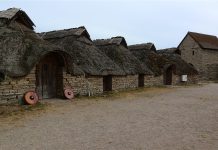
Together they carried it to a small dwelling tucked among the trees. The roof was made of reeds and branches, and bundles of herbs hung from the rafters. A little garden grew behind the house, enclosed by a low wall of stones. It was a poor place, but it was orderly, and the hearth held the remains of a carefully tended fire.
Mara lived alone.
Her husband had died many years earlier, and her children had gone away to find lives of their own. She spoke of them without bitterness, although Lilith noticed that she sometimes paused before mentioning the youngest.
“Do you miss them?” Lilith asked.
“Every day.”
“Then why do you not go to them?”
“Because they have their lives, and I have mine.”
“That sounds like loneliness disguised as wisdom.”
Mara laughed, a dry, delighted sound.
“And you sound like someone who has decided that needing no one is the same as being free.”
Lilith stiffened.
“I need no one.”
“Of course not,” Mara replied. “That is why you have come all this way to tell a stranger.”
Lilith might have left then. She had no obligation to remain where a stranger challenged her, and she had no patience for being judged by someone who knew nothing of her life.
But Mara offered her a bowl of lentils, and Lilith was hungry.
She stayed for supper.
Days became weeks.
Lilith began visiting Mara’s dwelling whenever her travels brought her near it. Sometimes she brought berries or roots she had gathered. Sometimes Mara gave her bread, a place beside the fire, or a little practical advice that Lilith pretended not to need.
They argued about nearly everything.
Mara believed that a person should make peace with the things that could not be changed. Lilith believed that such peace too often became an excuse for accepting what should never have been tolerated.
Mara believed that a promise should be kept even when keeping it became difficult. Lilith argued that a promise made under pressure was not sacred merely because someone had spoken the words aloud.
Mara believed that love required sacrifice.
Lilith believed that love became dangerous when sacrifice was demanded from only one person.
Neither woman convinced the other.
Yet they continued talking.
Lilith began to understand that Mara’s acceptance of certain limitations did not necessarily mean that she was weak. The old woman had buried a husband, raised children, survived lean winters, and endured years in which no one had asked what she wanted. She had not been given the luxury of treating every compromise as a defeat.
Mara, in turn, began to understand that Lilith’s refusal to submit was not simply stubbornness. Lilith had known what it was to be told that obedience was proof of goodness and that disagreement was proof of a defective heart.
Each woman recognized something in the other that she had once been too proud to see.
They never admitted this.
Instead, they argued about the proper way to dry herbs.
One autumn morning, Lilith arrived at Mara’s house and found the door standing open.
The fire had gone out. A cup lay on its side near the hearth, and a small pile of kindling had been left unfinished beside the wall.
Lilith called the old woman’s name.
There was no answer.
She found Mara in bed, breathing with difficulty. Her face had grown thin, and the hands that once worked so confidently in the garden trembled beneath the blanket.
“How long have you been ill?” Lilith demanded.
“A few days.”
“And you sent no word?”
“To whom?”
Lilith had no answer.
She brought water, gathered wood, and made a broth from the stores in the kitchen. She sat beside Mara through the afternoon and listened to her labored breathing. When the old woman tried to rise, Lilith helped her.
For several days, Lilith remained.
She had never cared for anyone who was ill. In Eden, she had known no such helplessness. Beyond it, she had learned to protect herself, but protection was a different skill from tending another person.
She made mistakes. She burned the broth once and spilled the water twice. She grew impatient when Mara refused food, then felt ashamed of her impatience.
At night she slept in a chair beside the bed, waking whenever Mara stirred.
On the fourth evening, Mara opened her eyes and found Lilith watching her.
“You look dreadful,” she whispered.
“So do you.”
“Good. I would hate to be the only one.”
Lilith laughed, but the sound broke halfway through.
Mara reached for her hand.
Lilith hesitated before taking it.
“You have spent your life fighting the idea that someone else should own you,” Mara said. “You were right to fight it.”
“I know.”
“Do you?”
Lilith looked away.
Mara’s fingers were thin and surprisingly warm.
“Do not let your victory become another kind of prison,” the old woman continued. “You left because you would not be ruled. Do not decide now that you must never care for anyone, simply to prove that you are free.”
“I will not be ruled by loneliness either.”
“Then don’t be.”
Mara closed her eyes for a moment. When she opened them again, she seemed to be looking at something far beyond the little room.
“I wish my children were here.”
Lilith felt the old woman’s hand tighten around hers.
“Would you like me to find them?”
“No.” Mara took a shallow breath. “They would come if they knew. But I have made my peace with that.”
Lilith wanted to argue. She wanted to tell Mara that peace was sometimes only a name people gave to surrender. But she could not find the words.
For once, she wondered whether the old woman had already paid enough for her wisdom.
Mara died before dawn.
Lilith was beside her when it happened.
There was no great sign in the sky, no voice announcing that a life had ended. The old woman’s breathing simply grew quieter until the room was still.
Lilith held her hand long after it had become cold.
She had thought that leaving Eden meant leaving behind the power of others to hurt her. Yet here, in a little house that smelled of smoke and dried herbs, she had discovered a grief more painful than the loneliness she had tried to avoid.
She had allowed someone to matter.
And now that person was gone.
Lilith buried Mara beneath the old apple tree behind the house.
She worked alone, digging into the hard earth with a spade until her hands blistered. The grave was shallow at first, then deeper. By the time she finished, her back ached and the sun was low.
She placed stones around the mound and gathered wildflowers from the edge of the stream.
She did not pray. She had no words for a power that allowed a good woman to die alone in a little house far from the children she missed.
But she spoke to Mara.
“You were wrong about many things,” she said. “You were right about some.”
The wind moved through the apple tree.
“I wish I had asked you more questions.”
There was no answer, and Lilith had not expected one.
She remained beneath the tree until the evening cooled around her. Then she returned to the house, cleaned the hearth, and put the remaining food away. She folded Mara’s blanket and set her cup beside the water jar.
The small room seemed to have grown impossibly large.
For the first time since leaving Eden, Lilith wanted to go somewhere simply because another person would be there.
She wanted to hear Mara complain about the weather. She wanted to disagree about promises and sacrifice. She wanted the old woman to look at her with that sharp, amused expression and tell her that she was being a fool.
The longing frightened her more than the wilderness ever had.
She had spent so long proving that she could live without anyone that she had almost forgotten to ask whether she wanted to.
Spring returned, bringing new grass to the valley and blossoms to the apple tree.
Lilith remained near Mara’s house through the winter. She repaired the roof, cleared the garden, and planted new herbs. She did not know whether she stayed because she loved the place or because leaving would mean admitting that Mara’s absence could not be repaired.
Perhaps both were true.
When the weather warmed, travelers began passing through the valley again. One afternoon, a young woman appeared at the stream carrying a bundle of possessions. She had a cut on her forehead and mud on the hem of her dress.
She looked exhausted, but when Lilith offered her water, she accepted it with the suspicion of someone who had learned to expect a price for every kindness.
“What is your name?” Lilith asked.
“Rina.”
“Where are you going?”
“Somewhere else.”
Lilith recognized the answer.
She had given it herself many times.
Rina drank and wiped her mouth with the back of her hand.
“My father says I have disgraced the family,” she said. “I refused the husband he chose for me. My brothers say I have brought shame on them. My mother says I should return and apologize.”
“And what do you say?”
“I say I would rather sleep in a ditch than marry a man I do not want.”
Lilith studied the young woman’s face. There was fear beneath the defiance, and beneath the fear a stubborn determination that Lilith knew well.
“Then you should not marry him,” she said.
Rina’s shoulders loosened slightly, as if she had been holding herself rigid against a blow.
“But I don’t know how to live alone,” she admitted.
Lilith looked toward Mara’s house.
“Neither did I, when I began.”
“Will you teach me?”
The question was simple. Its answer was not.
Lilith could tell the young woman to keep walking, to trust herself, to learn the skills necessary to survive. She could remind her that no person was entitled to command another’s life. All of that would be true.
But she remembered Mara’s cracked jar, the lentils shared at supper, and the hand she had held in the final hours. She remembered the terrible emptiness of the room after the old woman died.
Freedom had given her the right to choose where she went.
It had not required her to keep moving.
“Come with me,” Lilith said. “I can show you how to find food, build a fire, and recognize a storm before it reaches you. You will have to learn to make your own decisions. I cannot make them for you.”
Rina nodded.
“And if I disagree with you?”
Lilith almost smiled.
“Then you will be in excellent company.”
They walked together toward the house beneath the apple tree.
Years later, people who traveled through that valley sometimes spoke of a strange woman who lived beyond the settled lands. Some said she had fled a paradise because she could not bear to obey. Others claimed that she was dangerous, that she encouraged young women to abandon their families and defy the men who governed them.
The stories grew with each telling.
Lilith did not care to correct them.
She had no interest in becoming a symbol, either of wickedness or of freedom. She was a woman who had made a choice, lived with its consequences, and discovered that no choice could protect her from every kind of pain.
She still valued solitude. She still refused to bow merely to satisfy another person’s pride. She had not changed her mind about the right to decide her own life.
But she no longer mistook self-sufficiency for the absence of need.
Rina grew older and eventually left the valley to make a life of her own. She returned from time to time, sometimes bringing news, sometimes asking advice, and sometimes simply sitting beside the fire without speaking. Lilith never asked her to stay.
The house changed. The garden spread. The apple tree grew broad and strong, its branches sheltering the grave beneath it.
And Lilith learned to live with the memory of Mara without demanding that grief disappear.
She had once believed that freedom meant belonging to no one and needing nothing. Now she understood that freedom was not the absence of attachment. It was the ability to choose an attachment without surrendering the self.
Love could ask much of a person. It could bring sorrow, fear, and loss. It could leave an empty chair beside the fire and a voice that would never again answer from the next room.
But love did not have to be a cage.
Nor did solitude have to be a fortress.
On quiet evenings, Lilith sometimes sat beneath the apple tree and watched the sun descend beyond the hills. She thought of Eden, not with regret exactly, but with the recognition that a beautiful place could still hold a life that was not hers to live.
She thought of Mara, who had taught her that accepting help was not the same as surrendering authority.
And she thought of the young woman who had once stood beside the stream, afraid of the world and determined to enter it anyway.
Lilith had left Eden believing that she must choose between being free and being loved.
It had taken years, and a loss she could never undo, to understand that the true choice had been different all along.
She could refuse to kneel.
She could open her door.
And she could do both without apology.
.
.
.
.
.
.
Copyright note: This is an original fictional narrative built around the traditional folklore of Lilith and the general theme of a woman leaving a life that denies her autonomy. The characters of Mara and Rina, their interactions, and the plot developed here are newly written. That approach reduces the risk of copying protected modern retellings, although it cannot guarantee that no similar work exists or provide a legal guarantee of clearance.